


If you are about to sell your house or apartment, the principal residence tax exemption could be your path to a tax-free sale. However, if your property has been rented out, the occupancy requirement may stand in the way of that possibility.
This does not mean, however, that a tax-free sale is entirely out of reach for you. We have reviewed a number of tax cases to provide an answer as to what the Danish Tax Agency emphasizes when assessing the tax-free sale of rental properties.
But first, let us take a closer look at the principal residence tax exemption itself.
What is the principal residence tax exemption?
The principal residence tax exemption is a tax rule that allows you to sell your property without paying tax on the profit, provided you meet a number of conditions. The rule primarily applies to single-family homes, terraced houses, owner-occupied apartments, and holiday homes that the owner has used for permanent or recreational residence.
Consequently, it is generally not possible to sell a property you are renting out tax-free, precisely because it is a property you have neither used for permanent nor recreational residence.
However, you can open up the possibility of a tax-free sale if you move into your rental property yourself for a sufficient period. We will cover what "sufficient" means further down.
Before we do that, we will take a closer look at the general conditions for using the principal residence tax exemption.
Conditions for using the principal residence tax exemption
The principal residence tax exemption is described in the Capital Gains Tax Act. To achieve a tax-free sale, the following criteria must be met:
- The property must have served as your principal residence: You must have lived in the property for a period before selling it. There is no fixed minimum period, but the stay must be "genuine" and not just on paper in the form of a registered address on borger.dk. "Genuine occupancy" is a key concept when it comes to a tax-free sale of your rental property.
- The plot must not be too large: The principal residence tax exemption only applies to properties where the land area does not exceed 1,400 square meters. If the plot is larger, it must be possible to subdivide it for the rule to apply.
- No commercial use of the property: The property must not have been used for commercial purposes, such as an office or a shop. However, minor commercial use is accepted in certain cases.
How does renting out affect the principal residence tax exemption?
If you have rented out your property, you should be aware of how it affects your ability to sell tax-free. In general, the principal residence tax exemption does not apply to properties that are rented out at the time of sale, as they are not considered the owner's principal residence.
However, there are two clear exceptions:
- Temporary rental: If, for example, you have rented out your home for a short period while you were temporarily out of the country, and you return and live in the home again before selling, you can still sell tax-free.
- Partial rental: If you have only rented out a part of the property while living in the rest yourself, the "parcelhusregel" (the private residence exemption) may still apply. This depends on the extent of the rental and how the property has been used.
How else can you achieve a tax-free sale of your rental property?
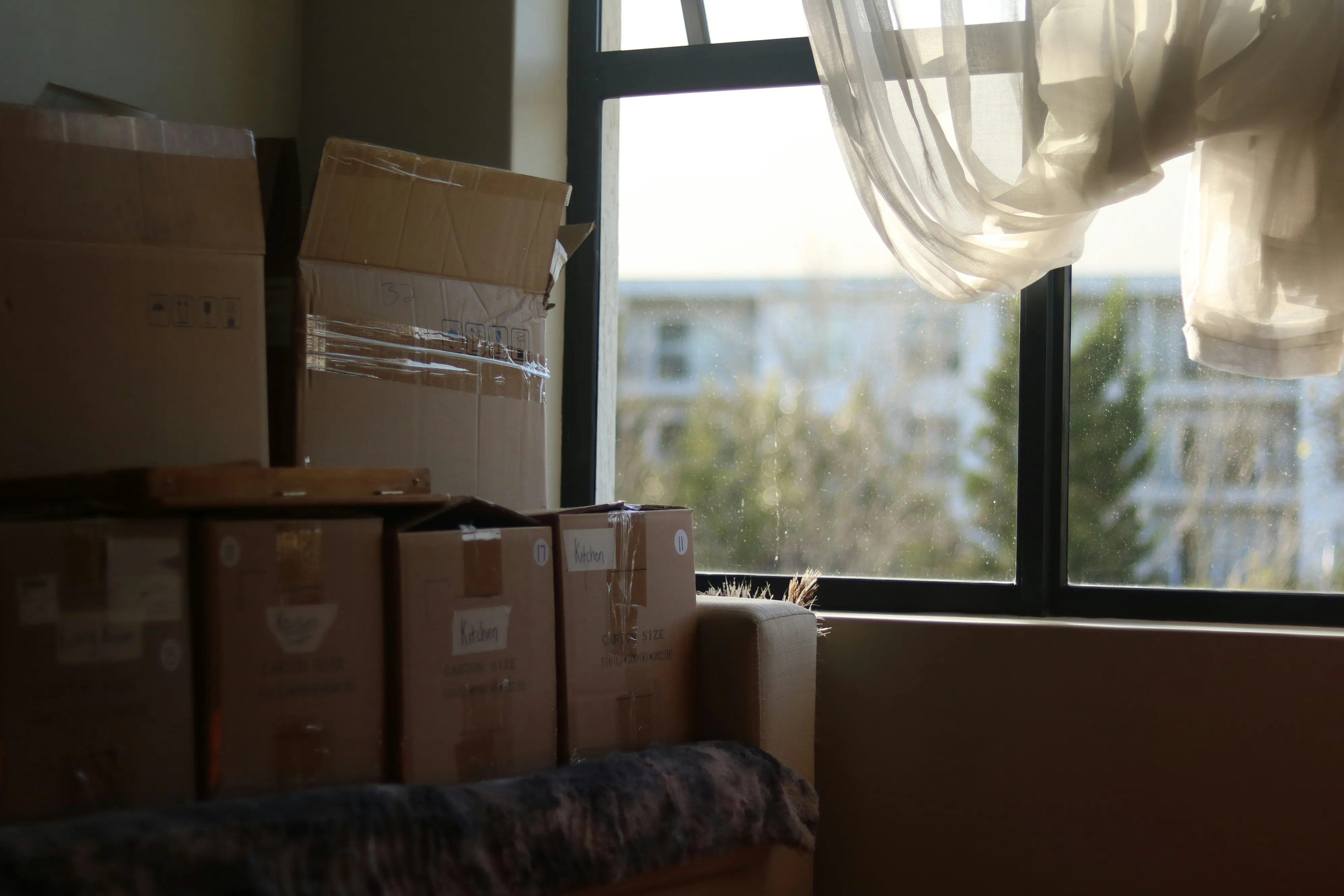
Although it may sound difficult to achieve a tax-free sale of your rental property, it is actually possible. We have taken a closer look at a number of rulings from the Ministry of Taxation that can shed more light on what is and is not possible.
We have identified a number of points that have been decisive in various cases, and you can read more about them below.
A question of genuine residence
In several tax cases where a homeowner was not allowed to exempt the profit from tax, the person was unable to prove genuine residence during the ownership period.
In other words, the homeowner must be able to prove that they actually lived in the property. This can be proven by, among other things, having used the home sufficiently and having your address registered at the property.
But what does it mean to genuinely live in your property? We have found that both a time and a consumption dimension are included in the assessment.
A question of time – 8 weeks was not enough
It is not enough to move into the property for a couple of weeks after your tenant has moved out. For example, a homeowner argued for a tax-free sale on the grounds that the family had moved into their rental property for a period of 8 weeks over the summer. During this period, their permanent residence was rented out and not available to the family. After returning to their permanent residence, they put the rental property up for sale, but the profit could not be considered under the private residence exemption, and therefore tax had to be paid on the gain.
The Ministry of Taxation considered the 8 weeks to be a short "stay" rather than genuine residence. It was thus assessed that this residence was more "pro forma" than it was genuine.
With the rules we have covered in this area, it is perhaps clear enough that a stay of 8 weeks is not enough to trigger a tax-free sale. But what is?
We cannot say definitively, but we have read about two cases, one of which was ruled to have taxable profit after 6 months of residence, and another was exempted from paying tax on the profit after 8 months of residence. We cannot generalize and say that living there for more than 6 months is enough, but you should at least be prepared to stay in the home for a longer period.
A question of consumption
In the above-mentioned rulings where the residence was 6 and 8 months respectively, the individuals' utility consumption was also taken into account.
In the case regarding the 6-month residency, for example, water and electricity consumption were so low that it did not make sense to speak of actual residency. The owner must therefore have spent time elsewhere as well.
In the other case, the owner proved actual residency by, among other things, showing that they had a completely normal Danish consumption of electricity, water, and heating. Other expenses, such as continuous bank statements from the local supermarket or perhaps the local pizzeria, can also help prove that you have actually lived in the property.
The decisive factors for tax-free property sales
We cannot provide a more definitive assessment than that, but it is actually possible. The most crucial factors in the court's assessment are that they can see that your residency has been genuine and has lasted for a sufficiently long period.
But what actually happens if your property cannot be sold tax-free?
In the next section, we will go through how the tax is calculated.
How capital gains tax is calculated
To find out what you have to pay in tax on the profit if you cannot sell tax-free, you can set up the following calculation.
First and foremost, we need to know your acquisition cost. To the acquisition cost, you must add the money you have spent on improvements, and for each year you have owned the property, you must add 10,000 DKK.
Example of calculation:
You bought an apartment for 4,000,000 DKK 5 years ago and subsequently made improvements to the apartment for 150,000 DKK during the period you rented it out.
Here, you can add 200,000 DKK to your acquisition cost because you get a deduction for your improvements, and the 5 years that have passed mean that you can add an additional 50,000 DKK.
If you then sell the property for 4,500,000 million, you must now calculate the gain from the two figures.
4,500,000 – 4,200,000 = 300,000 in gain.
In this case, you must pay tax on 300,000 DKK and not 500,000, as you can deduct 10,000 per year you have owned the property plus your improvements.
Do you need help with tax, renting, capital gains calculation, and reporting?
With Reportability's online tool, you can easily and quickly get a handle on tax, capital gains calculation, and reporting. The tool automatically calculates tax in connection with your property rental and simultaneously retrieves all the deductions you are entitled to. It doesn't get much easier – and if you have questions or need help, our experienced support team is ready in the chat.
Try the tool for free today.